I have melasma. I had it years before I ever understood what it was (or why I had it). I recall clearly the day I snapped a photo and thought – why does my face look dirty? Ever since that day, I’ve been looking for ways to make it better.

What is Melasma?
It is a skin condition (not contagious) that creates brown patches (in my case) on my face and neck. It can be triggered by heat and sun exposure but most often has an underlying hormonal trigger. For some it may come up during pregnancy. For me, it started when perimenopause hit. As if we aren’t dealing with ENOUGH at that point, am I right?
The challenge is…it’s not the easiest thing to treat. The gold standards are:
- SPF – for prevention/reduction (This is already part of my daily routine)
- Topical Hydroquinone (I tried using Musely treatment and after several months found no difference. You can’t use hydroquinone consistently; you need to take breaks.)
- Topical tretinoin (I’ve used tretinoin for years and I can say that, for me, it has NOT made a difference on my melasma. I still use it for its other benefits).
Other treatments, like superficial chemical peels, sound too painful and I hate the downtime and discomfort so that’s a last resort for me. I’m a little more open to microdermabrasion, but there’s always the risk that being too harsh with your skin can trigger it even more. Lasers are generally NOT recommended because of the heat. I did try one laser session with a treatment that was supposed to target it, and I saw no effect.
Bottom line: I’ve tried…a lot.
Enter good old Instagram ads.
Man, do the algorithms have me pinpointed. I saw this ad come up over, and over, and over for the amazing benefits of turmeric and kojic acid pads. Like a pad is going to solve something that the rest of the heavy hitters didn’t. Right.
But I am a curious and daring soul – and I like to test these things out to save all of you the heartache and frustration.
Let’s start by looking at the ingredients
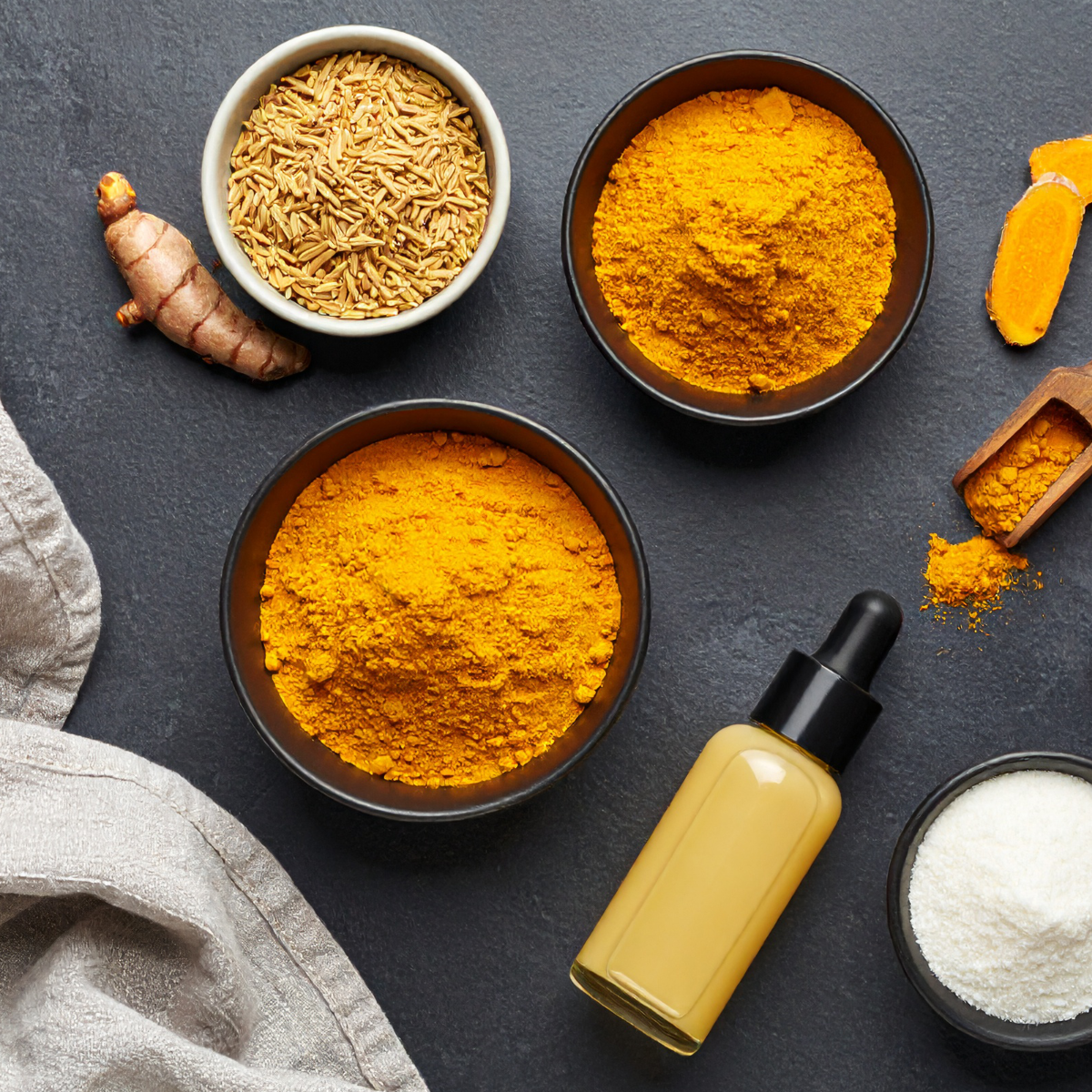
Benefits of Topical Turmeric
Turmeric is anti-inflammatory (which is related to the melasma triggers), antioxidant (protects the skin against UV damage), and antimicrobial (that’s just good stuff!). In addition to all of these traits, it can improve skin tone, reduce the appearance of blemishes, and even improve dark spots. This little powerhouse is credited with helping wound healing, fighting acnes and even treating scabies! Caution – it can stain skin yellow so be careful with your use of it.
Benefits of Kojic Acid
Topical kojic acid can inhibit melanin production (stopping melasma in its tracks) which means it can fade dark spots. This can cause inflammation and contact dermatitis when used in higher concentrations so again proceed with caution.
Turmeric + Kojic Acid Pads
The beauty industry has paired these guys together in pad form to use for cleansing skin. Generally you use the pads on a freshly cleansed face and leave it on for 2 to 10 minutes, depending on the brand. I find that following this timing closely makes a difference. I speculate that the time correlates to the concentration of koji acid and your skin – but that’s entirely conjecture.
How do these different pads compare? Are you curious? I sure was.
Comparison
I tried to get several different version of the pads so I could see if there were any differences. In full disclosure, I dropped one of the more advertised brands out of the test because their communication and customer service was poor and I didn’t receive the product for over 12 weeks.
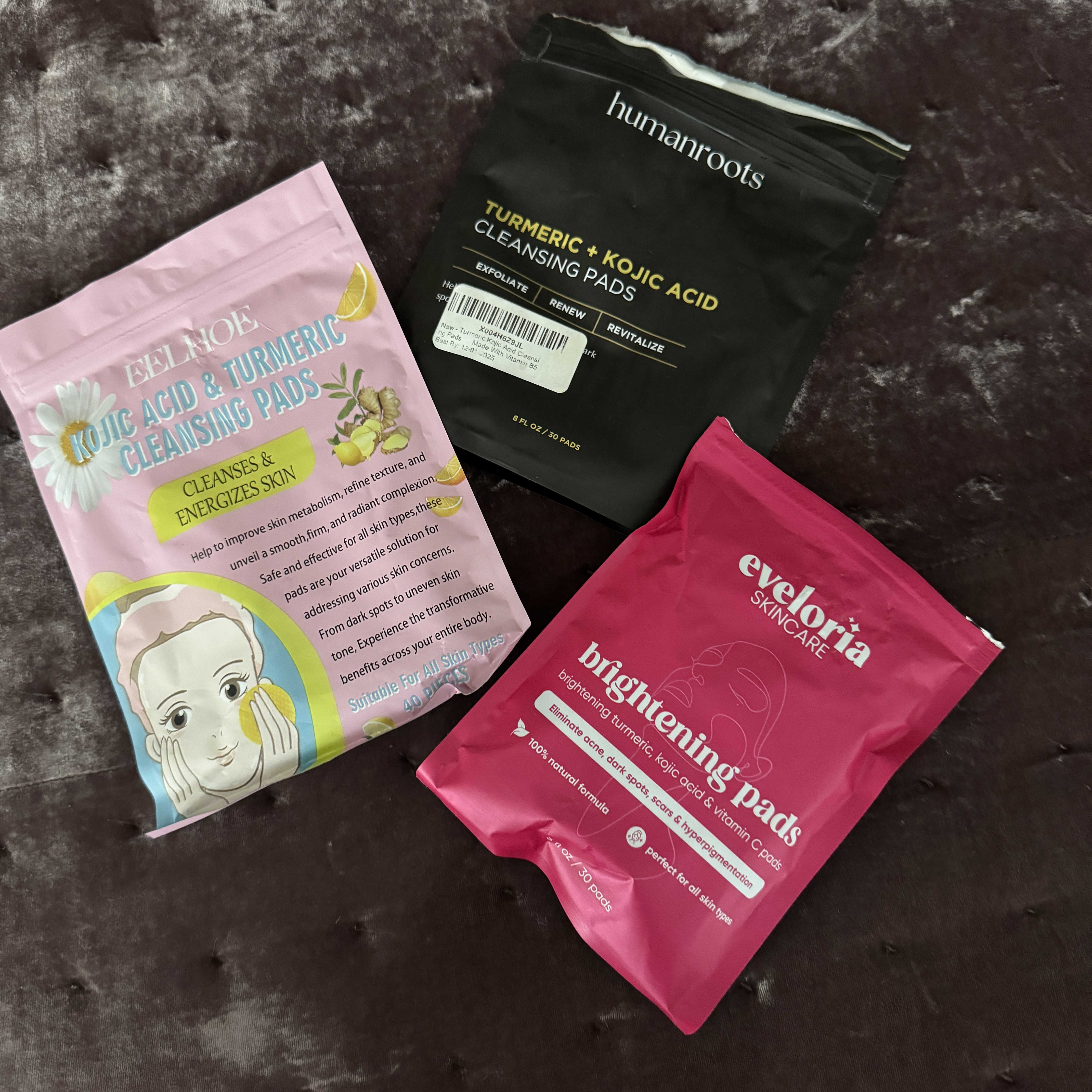
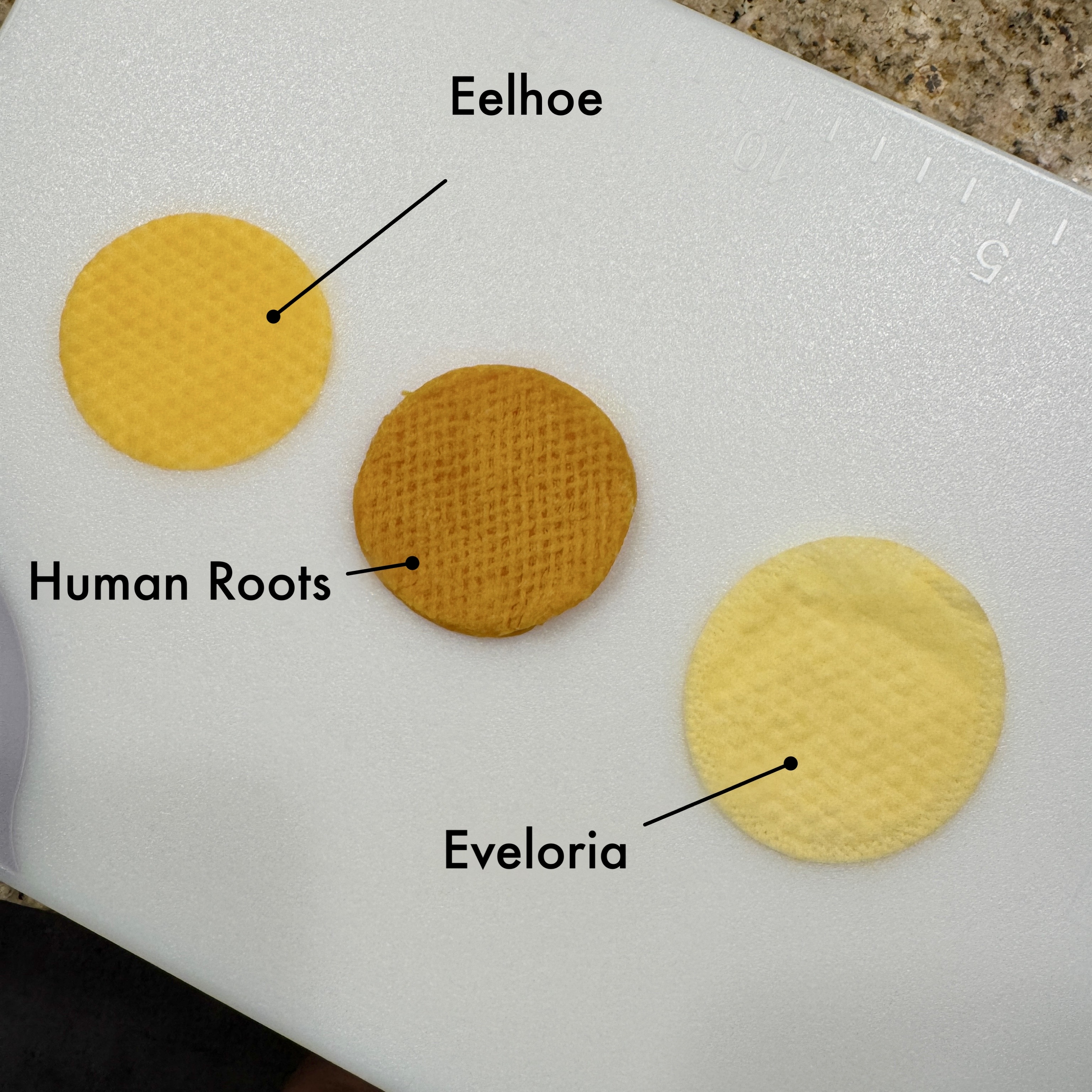
As you can see, the products are similar, but not the same.
The Eelhoe pads ($6.99 for 40 pads) are very thin but well saturated with product. It has a refreshingly short ingredient list which includes glycerin, turmeric root extract, kojic acid, golden chamomile extract, and ascorbic acid (vitamin C). It is made in China and contains little additional information. This product recommends leaving the serum from the pads on your face for 10 minutes.
By contrast, the Humanroots pads ($34.99 for 30 pads) are thick and meaty. The ingredient list on this has a few more items but it does list Kojic acid at 0.3%. This product is made in the USA. The pads are multi-layered dispense a fair amount of the active ingredient. The recommendation is for only 2 minutes on the skin with moisturizing after to avoid dryness. I found these pads tended to disintegrate as they were used so the form factor is not my favorite.
Finally, the Eveloria pads ($32.99 for 30 pads) are slightly larger than the other and include a little “pocket” to help you control the pad as you apply it. They do not disclose where they are manufactured but do include the percent of each ingredient. Specifically they have kojic acid powder as 2% of the serum and turmeric powder at 1%. They say the formula includes vitamin C but they list citric acid which is NOT vitamin C.
Unexpected Outcome
I really thought this was all a lot of hype. Just another example of me being suckered by good marketing campaigns.
Except…this stuff WORKED! I know. I’m shocked too!
I used the eelhoe pads first since they arrived before the others. I swear I saw a difference after just a couple of uses. I was thrilled – stupefied but thrilled! While these pads are thin, I can easily get enough on my face with a single thin pad.
Next in were the humanroots and I thought I would like the thicker pads. I do not. The eveloria pads took the longest to arrive (though they did arrive so points to them!) and I discovered the little pocket is a lovely touch.
Bottom Line
I think the turmeric and kojic acid pads really work. At least they work for me. I gifted some to my sister so I’m waiting to see if she thinks they brighten her skin as well. She, fortunately, is not dealing with melasma so it’s a bit of an apples to oranges comparison – but I will update this as I get her input.
I thought I would favor a made in the USA brand, though they were the most expensive. I generally think appreciate the quality, ingredient, and product controls our country has in place. But the least expensive version is the one I would stick with. I’ve included links to the products but there are so many options I couldn’t do an exhaustive comparison. If you search “turmeric and kojic acid” in Amazon’s search function, you will get four (4) pages of products!
I think it’s also worth noting that the eelhoe brand I received is actually NOT the brand advertised in the link. I’ve purchase the twice and both times they’ve been the same product, so take that as a warning.
I’ll keep using it. Do you think you will give this a try? Do you have a different favorite turmeric and kojic acid product you prefer? Share it in the comments if you do.
Disclosure: I am a participant in the Amazon Services LLC Associates Program, an affiliate advertising program. Some of these links are affiliate links. If you click a link and buy something, I may receive a commission for the sale. It does not cost you anything extra and you are free to use the link or not. Product purchases for review are made with my own money and my opinions are my own. If product is ever provided or the article is sponsored, it will be clearly noted at the top of the page.